Finding our way: Lost and Found in Transition
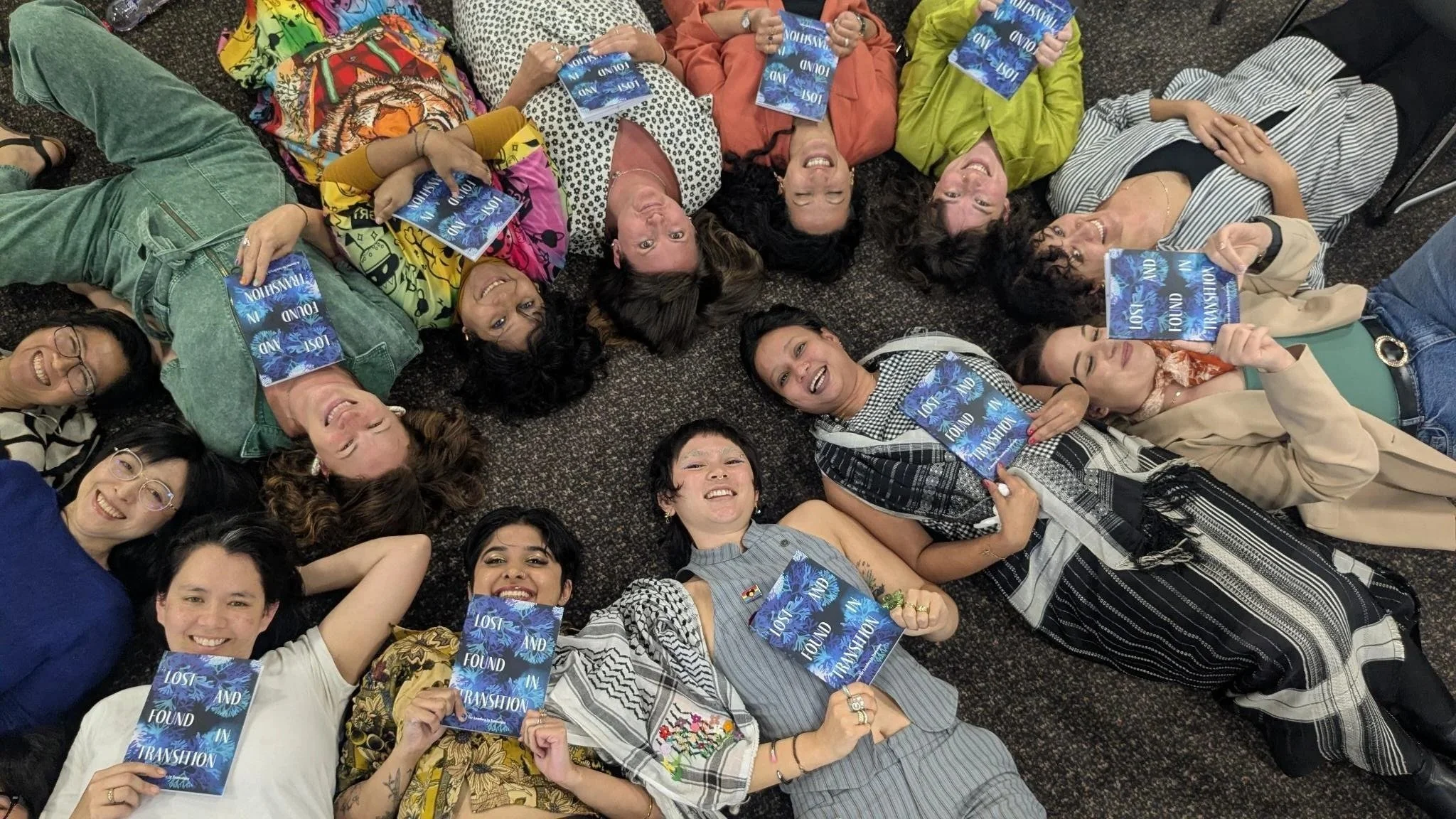
On the sidelines of Women Deliver in April 2026 in Melbourne, in a meeting room deep in an office building in the Central Business District, thirteen of us gathered for an intimate conversation on Leadership Transition.
An instruction video had to be made to help us find the room where we would meet up but we found our way! We all came from different places. Most of us were in town for Women Deliver, but not everyone. Most of us were not from Melbourne, but we called it home temporarily. Most of us came from the feminist movement space — as part of activist organisations, non-government organisations, or funding institutions — but not all of us. We were of different ages, but mostly millennial and Gen Z.
In partnership with Resurj, Closer Than You Think created this gathering as a moment for reflection on leadership transition in all its shapes and forms. Everyone who came received a copy of our new Lost and Found journal - a self-led guide with questions and prompts about different aspects of transition. The journal is based on a magazine Closer Than You Think published in 2025 as a collection of experiences, reflections, case studies, poems, and collages on feminist leadership transition, grounded in the current context of polycrisis, shrinking civic space, and major shifts in funding for human rights.
The conversation that was needed in that moment
We opened the meeting with a whacky icebreaker question (would you rather meet an alien or a ghost?) and the reading of a poem "Worshipping the Turf" written by Swatee Deepak. Everyone received a copy of the Lost and Found in Transition self-guided journal based on the research we have done over the past years on leadership transitions in feminist organisations.
Some people reflected on it as founders or formal leaders of their organisations or collectives. A few were not in formal leadership roles, but were still in the early steps of moving out of an institution that had been a center of gravity for a long time. Others were navigating professional transitions, whilst also aging out of adolescent or youth spaces as they grew older - intertwined transitions that exacerbated feelings of isolation.
We held quiet individual journaling time, followed by a group sharing.
None of us were necessarily prepared for the tears that joined us in that space. While the session started off with a pensive and collected conversation, it shifted and opened into a vulnerable and candid sharing space.
Participants who had founded their organisations shared the desire to let go, the uncertainty of finding new leadership, and the pressure of sustaining the livelihoods of the people working within their organisation. Some released the grief that comes with the acceptance of letting things come to a natural end. Others shared quiet solidarity — not verbally expressing their personal journeys, but expressing empathy through a hug, a hand hold, tears, or an enthusiastic nod in agreement.
Why this room mattered
What we witnessed in that Melbourne office building was, in miniature, exactly what the magazine argues transition should be: not a private ordeal to be endured alone, but a collective practice. The magazine is candid that most organisations still offer no reflective space for people to process transition - this contributes to stepping down feeling frightening or even shameful.
The sharing in the room also mirrored something the magazine names explicitly: transition doesn't move through tidy stages, it arrives in waves. Borrowing from the language of our magazine, everyone in the circle had visited the island of the in-between: no longer fully inside the identity an organisation or age bracket gave them, not yet settled into whatever comes next. That in-between space can feel isolating. It's markedly less so with twelve other people sitting in it alongside you.
The room held space for the ache of losing an identity - the worry over staff livelihoods and changes in relationships, the fear of what happens to a life's work once your hands are off it, feeling excluded as you are no longer young enough to be in the room.
Sharing these feelings out loud is a practice we rarely make room for. We learned that there is a hunger for community and friendship as we navigate transitions, and for stories that span ages, regions and sectors.
If any of this resonated, read the magazine and ask us about accessing the journal. Are you also working on leadership transitions? We would love to hear from you.